

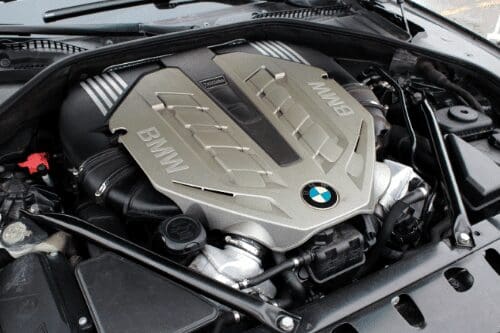
If your AC blows warm, you hear a clicking sound from under the hood when you switch it on, or the air just stopped getting cold, a failed compressor is one possible cause — but a low refrigerant charge, a bad clutch relay, or a leak somewhere else in the system can produce the same symptoms. A full AC compressor replacement typically runs between $1,081 and $1,463, according to RepairPal pricing data last updated September 3, 2026, with labor priced between $245 and $360 and parts between $836 and $1,103. Before anyone replaces yours, a shop should confirm the fault actually traces to the compressor, since RepairPal’s own guidance treats this as a job requiring trained diagnosis, not a guess from a warm vent.
What actually goes wrong before a shop calls it the compressor
Warm air on its own doesn’t identify which part failed. YourMechanic’s compressor guidance lists the two most common symptoms drivers notice first: "no cold air from the vents" and a "clicking sound from under the engine," alongside AC simply "not working" at all. Underneath those symptoms, the compressor itself can fail several different ways. YourMechanic explains that the compressor "has several moving parts (including pistons and valves)" that can wear and break apart internally, and separately that "it is also common for the seals in the AC compressor to go bad," which lets refrigerant or AC oil leak out. "If the seals no longer hold, you will need a new compressor, as the seals cannot be replaced."
A third failure path runs through the clutch rather than the compressor’s internals. YourMechanic notes the compressor "needs a clutch, bearing, and an electrical connector" to work at all — "the clutch is driven by a drive/serpentine belt, which engages the compressor when you switch on the AC," and if "the bearing or clutch have failed, it is recommended that the compressor be replaced." That’s a different failure than a worn-out internal pump, but it can produce a similar quote. A rough idle with the AC on is sometimes ignition, not the compressor; see what a spark plug replacement quote includes.
This article does not diagnose your vehicle. It describes these failure paths so you know what a shop should be checking before it recommends a new compressor.
### Symptom vs. what it actually points to
| Symptom | What it can point to | Source |
|---|---|---|
| No cold air from the vents | Low refrigerant charge, failed compressor, or a leak elsewhere in the system | YourMechanic |
| Clicking sound from under the engine | Compressor clutch or bearing failure | YourMechanic |
| AC not working at all | Electrical fault, clutch relay issue, or compressor failure | YourMechanic; RepairPal OBD-code data |
| Reduced or inconsistent cooling over time | Leaking seals letting refrigerant or AC oil escape gradually | YourMechanic |
How a shop confirms it’s actually the compressor
RepairPal describes this as a job that needs trained diagnosis, not a symptom check. Its guidance states plainly: "diagnosing the compressor requires advanced knowledge of air conditioning systems. AC systems should be repaired by a technician with proper training and certification. Professional-grade equipment is used to read the pressure, and the technician must rely on hours of classroom and training to diagnose the faulty part." That pressure read is what separates a real compressor failure from a system that’s simply low on refrigerant or losing charge through a leak somewhere else.
Three onboard diagnostic codes RepairPal ties to this repair point at the compressor’s clutch circuit rather than its internals: P0645, P0646, and P0647 ("A/C Clutch Relay Control Circuit," low, and high). A shop pulling one of those codes is looking at a relay or wiring fault before a worn-out pump — worth asking about, since a relay fix and a full compressor swap are priced very differently.
What an AC compressor replacement quote includes
A quote answering "AC compressor replacement" should account for more than the compressor itself. RepairPal’s process description covers the teardown: "replacement of most air conditioning components requires the complete evacuation of the air conditioning system. The serpentine belt, refrigerant lines and electrical connectors must be removed. Finally, the mounting bolts and hardware must be removed to let the compressor come free from the engine." After the new part goes in, "the AC system will be recharged with refrigerant." A dimming-lights symptom on the same belt points at charging, not cooling; what an alternator replacement quote includes covers it.
| Line item | What it covers | Source |
|---|---|---|
| Compressor unit | New or remanufactured compressor | RepairPal; YourMechanic |
| Receiver drier and orifice tube (or expansion valve) | Replaced alongside the compressor to catch metallic debris from the failed unit | YourMechanic |
| Refrigerant evacuation | Full system evacuation before the old compressor comes out | RepairPal |
| Serpentine belt, refrigerant lines, electrical connector removal | Access work to free the compressor from the engine | RepairPal |
| Refrigerant recharge | System recharged with refrigerant after the new compressor is installed | RepairPal |
No fetched source in this draft states a specific core-charge dollar amount for AC compressors, so none is published here — see the source-limits note below.
Refrigerant type: what the system is actually charged with
The refrigerant type the system takes is a fixed fact of the vehicle, not something a shop chooses. YourMechanic’s compressor description names the split by model year directly: the compressor works "as a pump taking refrigerant, (R-12 in older cars, R-134a in 1995 and newer cars) and pressurizing it, passing it along to the evaporator." That’s the refrigerant distinction the fetched sources for this draft actually document. Some newer vehicles use a different refrigerant again (commonly referred to as R-1234yf), but no source fetched for this draft publishes pricing, service procedure, or technical detail specific to that refrigerant, so this draft does not describe it further — see the unresolved gates below.
Why a compressor replacement usually means a new drier and orifice tube too
A failed compressor rarely fails clean. YourMechanic is direct about why the job isn’t just a part swap: "it is common for the internal parts of the compressor to come apart and disperse metallic debris throughout the system. Consequently, it is a requirement to replace the orifice tube and the receiver dryer when replacing the compressor since some of the debris may have ended up there." Skipping that step isn’t just a shortcut — it can void the new part’s coverage: "if the compressor is replaced without the dryer and the orifice tube, it will ruin the new compressor and it will not be covered by the warranty from parts manufacturers."
YourMechanic’s own repair sequence reflects that same logic: "check for power and ground at the compressor," and "if compressor is found to be faulty, remove all of the refrigerant," then "remove the compressor, receiver drier, orifice tube, and/or expansion valve," and finally "install new compressor, receiver drier, and orifice tube." The drier and orifice tube aren’t optional add-ons on this job — they’re built into the sequence from the start.
Related repairs that can price out differently
Not every AC failure prices out at full compressor-replacement cost. RepairPal lists three related repairs alongside its compressor estimate, each with its own price range:
| Related repair | Typical cost range | Source |
|---|---|---|
| AC Compressor Clutch Replacement | $691 – $826 | RepairPal |
| Air Conditioning Receiver Drier Assembly Replacement | $426 – $589 | RepairPal |
| Air Conditioning Refrigerant Line Replacement | $995 – $1,077 | RepairPal |
Those figures show why the clutch-vs-compressor distinction matters when comparing quotes — a clutch-only repair and a full compressor swap with a new drier are priced very differently, and a quote should say which one you’re being charged for.
Dated example quotes
These are the exact figures the fetched sources published — not AAR’s pricing, and not a promise about what any specific vehicle will cost.
| Source | Vehicle | Parts | Labor | Total | Date |
|---|---|---|---|---|---|
| YourMechanic | 2012 Porsche 911 | $767.81 | $832.14 | $1,600 | Accessed Sept. 2026 |
| YourMechanic | 2011 Nissan Altima | $803.71 | $875.94 | $1,680 | Accessed Sept. 2026 |
| YourMechanic | 2014 GMC Savana 3500 | $759.71 | $963.53 | $1,723 | Accessed Sept. 2026 |
| YourMechanic | 2008 Audi Q7 | $1,404.07 | $802.94 | $2,207 | Accessed Sept. 2026 |
| YourMechanic | 2015 Mitsubishi Lancer | $1,296.24 | $948.93 | $2,245 | Accessed Sept. 2026 |
| YourMechanic | 2015 BMW X3 | $2,171.34 | $1,240.91 | $3,412 | Accessed Sept. 2026 |
| RepairPal | National average (all vehicles) | $836-$1,103 | $245-$360 | $1,081-$1,463 | Sept. 3, 2026 |
YourMechanic publishes a full parts/labor breakdown for all six examples above, plus an "average dealer price" and a stated savings percentage against that dealer price for each; those dealer-comparison figures are YourMechanic’s own marketing framing rather than an independent cost source, so they aren’t reproduced here as a factual benchmark.
Labor and access
Getting the compressor out is most of the job before a new one goes in. RepairPal’s process names what comes off first: the serpentine belt, refrigerant lines, and electrical connectors, then the mounting bolts and hardware holding the compressor to the engine. Neither fetched source breaks labor time out by engine layout or mounting position, so none is stated here — access difficulty is named only as a qualitative step, matching what the sources document.
Signs you’re being quoted for the wrong part
A quote can be technically real and still be for the wrong repair. One sign, per RepairPal’s own framing, is a shop skipping the pressure read — RepairPal treats diagnosis with professional-grade equipment as a standard step, since "advanced knowledge of air conditioning systems" is what separates a real compressor failure from a system that’s simply undercharged. A second sign is a compressor quote that says nothing about the receiver drier or orifice tube, since YourMechanic treats skipping those parts as a warranty-voiding mistake, not a cost-saving option. A third is a quote for "compressor replacement" when a clutch relay code (P0645, P0646, or P0647) is present — that points at a relay or wiring fault, not necessarily a failed compressor.
When it’s not the compressor
Warm air or a dead AC system doesn’t always mean the compressor. Before paying for a replacement, ask what was ruled out:
- Low refrigerant charge from a leak elsewhere. A system can blow warm simply because it’s lost charge through a hose, seal, or fitting that isn’t the compressor itself — RepairPal’s Air Conditioning Refrigerant Line Replacement estimate ($995-$1,077) exists as a separate repair for exactly this reason.
- A failed clutch relay or its wiring, not the compressor’s internals. RepairPal’s OBD-code data ties P0645, P0646, and P0647 specifically to the A/C clutch relay control circuit — a relay or connector fault that doesn’t require replacing the compressor itself.
- A bad clutch or bearing rather than the compressor pump. YourMechanic separates clutch/bearing failure from internal compressor failure, and notes a clutch-only repair (RepairPal’s estimate: $691-$826) is a different job than a full compressor swap.
- Sludge or debris elsewhere in the system. YourMechanic notes a compressor can fail because of "sludge or debris in the air conditioning system," which may mean the hoses, evaporator, and condenser need flushing rather than — or in addition to — a new compressor.
No fetched source supports remote or over-the-phone AC diagnosis. Every check above requires the vehicle and the system’s pressure readings in the shop.
What to ask before you approve the repair
- Was the system pressure-tested to confirm the compressor is actually the fault?
- Is an OBD code present, and if so, does it point at the compressor or at the clutch relay circuit?
- Does the quote include a new receiver drier and orifice tube (or expansion valve), or just the compressor?
- Is the noise or symptom coming from the compressor itself, or from the clutch and bearing?
- Is the quoted compressor new or remanufactured, and what’s the warranty on it and on the drier/orifice tube together?
A shop that can answer all five before you approve the work has done a real diagnosis, not a guess from a warm vent. If it can’t answer the first two — whether the system was pressure-tested and what any code actually points at — that’s a sign the diagnosis stopped at "the AC isn’t cold" rather than the pressure readings themselves.
None of this is a claim that any specific vehicle needs a new compressor. RepairPal’s own description of this repair — diagnosis first, full evacuation and access work, a new compressor plus a new drier and orifice tube, then a recharge — exists because a warm vent or a clicking noise can trace to several points in the AC system, and a real diagnosis finds the actual one before a part gets replaced.
For a Rowlett-area vehicle blowing warm air, cycling on and off, or making noise when the AC is switched on, Accelerate’s auto AC repair service is the existing local owner for identifying what’s actually behind an AC complaint before any part is replaced. That link is not a claim that compressor replacement itself is priced or guaranteed there.