

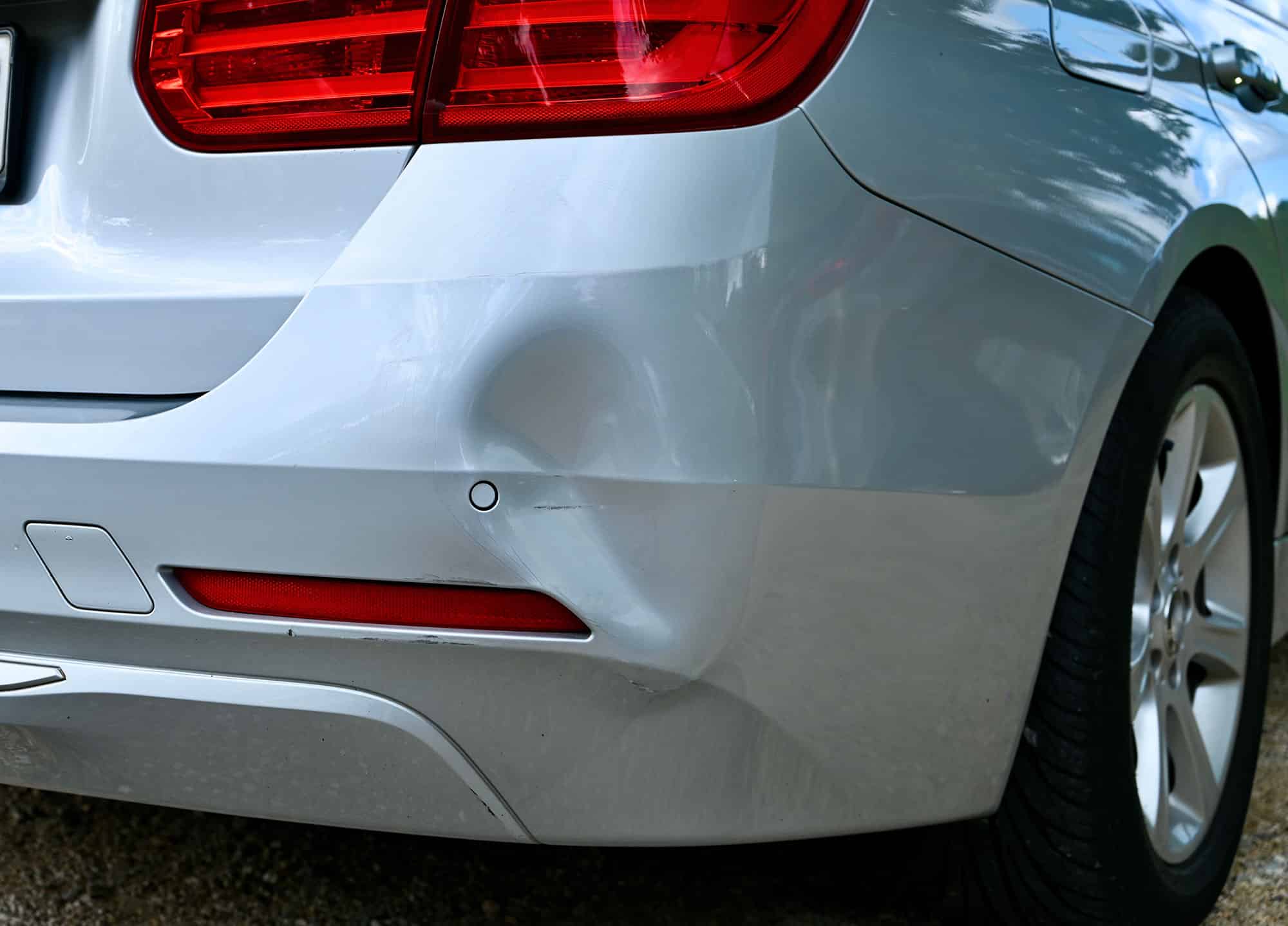
A dent repair estimate is built from five things: how big and deep the dent is, where it sits on the panel, what the panel is made of, whether the paint is broken, and whether a tech can reach the back side of the metal. Change any one of those and the number moves, and it also decides which of three repair paths applies — paintless dent repair, conventional fill-and-paint, or panel replacement. This page walks through each factor with real, dated repair examples — it does not quote AAR’s own prices or tell you what your car needs.
What changes the number: size and depth
A dent’s footprint and how far it pushes into the panel is the first variable an estimator reads, and it scales the price more directly than almost anything else.
A quarter-sized ding and a dent the size of a dinner plate are not the same job even when both sit on the same flat door panel — more surface area means more time massaging the metal back to its original contour, and a deeper dent usually means more stretched metal to work, which takes longer regardless of size. Dent Time’s published paintless-dent-repair pricing illustrates the scaling: 2-inch dents run $220–$264, 3-inch dents run $290–$344, 4-inch dents run $370–$425, 5–6 inch dents run $480–$584, and 8-inch-plus dents run $700–$900 or more. That’s one PDR shop’s published range, not a national average or an AAR price — but the pattern (bigger dent, higher cost) holds across the industry. For the no-paint method itself, what a paintless dent repair quote includes shows how the per-dent price is built.
What changes the number: where the dent sits
A dent’s location on the panel matters as much as its size, because a body line or a panel edge is far harder to reshape than a flat surface.
A door skin’s flat middle is the easiest place for a technician to work — there’s room to push, pull, or glue-pull the metal back into shape without disturbing a styling crease. A dent that crosses or sits on a body line — the sculpted crease manufacturers mold into modern sheet metal — requires the tech to rebuild that crease exactly, which takes more skill and more time. Dent Time’s data quantifies this: a body-line dent commands roughly a 50% premium over an identical flat-panel repair, described as "the single biggest price driver" in that shop’s pricing model. A dent near a panel’s edge, a seam, or a reinforcement brace behind the metal carries its own premium for the same reason — less room to work the metal from behind.
What changes the number: panel material
Steel, aluminum, and plastic don’t behave the same way under a dent tool, and that difference shows up directly on the estimate.
Standard steel is the baseline most PDR pricing is built around. High-strength steel — increasingly common in modern body structures — adds roughly 25% to a comparable repair because it resists the massaging technique PDR depends on. Aluminum panels, used on hoods, some doors, and increasingly full body structures on premium vehicles, add roughly 50%, since aluminum work-hardens differently than steel and is more prone to cracking or thinning if worked incorrectly. A satin or matte factory finish adds roughly 30% on top of either, because that finish is harder to protect and re-blend during the repair. Plastic bumper covers are a different case entirely — plastic doesn’t respond to PDR the same way sheet metal does, which is one reason a dent that crosses from a metal panel onto a plastic bumper cover often needs a different repair path for each material.
Why paint condition decides the method
Whether the paint is broken over the dent is the single biggest fork in the road, because it decides whether paintless dent repair is even on the table.
Paintless dent repair works by massaging the metal back into shape from behind or alongside the panel, without cutting, filling, or repainting — which only works if the factory paint and clear coat are still intact over the dent. Once paint is cracked, chipped, or scraped down to metal, PDR is no longer a clean option: the repair shifts to conventional fill-and-paint, where the tech may still reshape the metal first but then fills any remaining low spots with body filler, primes, and repaints the panel. A cracked-paint dent that would have been a same-day PDR job on intact paint becomes a multi-day paint job instead, with the labor and material cost that comes with color-matching and clear-coating a panel.
PDR vs. fill-and-paint vs. panel replacement
These are the three paths a dent repair can take, and an estimate should say plainly which one it’s charging for.
| Method | What it involves | Best fit | What it doesn’t fix |
|---|---|---|---|
| Paintless dent repair (PDR) | Massaging metal back into shape from behind or alongside the panel; no cutting, filling, or repainting | Dent with intact paint, reasonable access to the panel’s back side, moderate depth | Broken paint, sharp creases, panels with no back-side access, plastic bumper covers |
| Conventional fill-and-paint | Reshape what can be reshaped, fill remaining low spots with body filler, prime, blend, and repaint | Broken paint, deeper dents, dents where PDR access is blocked | Structural damage behind the panel, severely stretched or torn metal |
| Panel replacement | Remove the damaged panel and install a new one (OEM, aftermarket, or recycled), then paint and blend to match | Metal too stretched or torn to reshape, structural damage, sensor-zone restrictions on the panel | Nothing on the new panel itself, but adds parts cost and paint-match risk that repair methods don’t carry |
Which path applies is a vehicle-specific, damage-specific call the shop makes after inspecting the panel in person — not something this page can decide from a description or photo.
Access behind the panel: the hidden cost driver
Whether a technician can physically reach the back side of the dented metal is a factor most drivers never think about until it shows up on the bill.
PDR tools work by applying pressure from behind the panel, through gaps around window frames, wheel wells, or trunk seams, or by removing interior trim to open a path. Some panels — particularly roof sections with structural bracing, or areas boxed in by reinforcement — have no practical back-side access at all. When access is blocked, a shop either uses glue-pull tabs on the visible side (a technique with its own limits on larger or deeper dents) or moves the job to conventional repair. Trim removal and reinstallation to gain access is itself billable time, separate from the dent work.
Hail damage is a separate case
Hail damage is not a single-dent job, and it’s worth treating as its own category rather than folding it into a single-dent estimate. When there are dozens of dents from one storm, the estimate is built differently; see what a hail damage repair quote includes.
A hailstorm typically leaves dozens to hundreds of individual dents spread across every horizontal and near-horizontal panel on a vehicle — hood, roof, trunk lid, and the upper edges of fenders and doors. Progressive’s published consumer guidance on hail claims notes that comprehensive coverage is required to claim hail damage, that a driver pays the comprehensive deductible first, and that significant hail damage can total a vehicle outright rather than get repaired. Because hail repair pricing depends on total dent count and panel coverage across the whole vehicle rather than a single dent’s size and location, it doesn’t fit the same per-dent math this page walks through — a hail estimate needs its own inspection and its own page, not an extrapolation from a single-dent price.
Insurance claim or self-pay: what to weigh
Whether to file a claim or pay out of pocket is a math-and-risk question, not a legal one, and it’s worth working through before repairs start.
Progressive’s guidance on hail claims states the general principle plainly: "If your repair estimate amount is less than your deductible or close to it, you’re better off paying for the repairs out of pocket." The same guidance notes that filing a claim can raise a policy’s rate at renewal, and that insurers evaluate claim history differently from one company to the next. None of that is legal advice, and it applies beyond hail to any single-dent claim — the comparison is always between the estimated repair cost and your own deductible, plus how a claim might affect your renewal pricing, which varies by insurer and state.
Dated example estimates: what real dent repairs have cost
Real, sourced numbers show the range better than a made-up one. Two independent, dated single-dent examples, plus one collision-adjacent reference for scale:
| Vehicle / scope | Cost | Date / source |
|---|---|---|
| 2020 Honda Civic, 1.5-inch door ding, flat panel, standard steel, about 25 minutes of work | $197 | Dent Time published PDR pricing, updated June 2026 |
| 2022 BMW M4, 2.5-inch rear-door dent on a body line, high-strength steel, about 90 minutes of work | $540 | Dent Time published PDR pricing, updated June 2026 |
| 2017 Subaru Outback, rear-end contact against a parked Chevrolet Cruze — bumper and adjacent panel damage | $1,159 (Outback side of a $1,899 combined estimate) | IIHS rear crash prevention test report, published February 22, 2018 |
The Honda and BMW figures are one shop’s published PDR pricing for two specific, described jobs — not a national average or an AAR estimate. The Outback figure is a collision-test scenario, not a pure dent job, and is shown only to illustrate how a real body-panel estimate itemizes and totals when contact damage extends beyond a single dent. None of the three predicts what any reader’s repair will cost.
What can make an estimate change mid-repair
An estimate written before the panel is worked on is a starting point, not a final number.
A dent that looks paint-intact from a distance can reveal a hairline crack once a tech gets close with proper lighting, which can shift the job from PDR to fill-and-paint mid-estimate. Working the metal can also expose that it’s more stretched than it first appeared, which can shift a fill-and-paint job toward panel replacement. Either shift should come back to you before the shop proceeds, not appear as a surprise on the final invoice.
What to ask before you approve the work
You don’t need to diagnose the dent yourself. A short list of questions gets you a clearer estimate:
- Is the paint broken over the dent, or still intact?
- Is this dent on a flat panel or crossing a body line?
- What’s the panel material — standard steel, high-strength steel, or aluminum?
- Can the tech access the back side of the panel, or does this need glue-pull or trim removal?
- Is this a PDR job, a fill-and-paint job, or a panel replacement — and why?
- If it’s hail damage, how many panels and dents are involved, and does that change the math?
- If you’re filing a claim, how does the estimated cost compare to your deductible?
For a Rowlett-area vehicle, Accelerate’s paintless dent repair service is the existing local owner for getting those questions answered against your actual vehicle. That link does not diagnose damage, quote a price, or promise a specific repair outcome.
The practical answer
A dent repair estimate is not one number — it’s the sum of size, location, panel material, paint condition, and access, and those five factors together decide whether the job is paintless dent repair, conventional fill-and-paint, or panel replacement. Hail damage runs on different math entirely, because it’s a whole-vehicle job, not a single-dent one. The way to read an estimate well is to ask which of those factors is driving the number, not to compare a single total against a figure you saw somewhere else.