

Strut replacement cost is not one number because “replace the struts” is not one clearly defined job. A quote may cover one corner, both sides of an axle, a bare strut cartridge or housing, a complete loaded assembly, new mounts and bearings, an alignment, or only part of that list.
Start with the exact vehicle and the exact failed component. Then compare the parts package, position, labor, alignment and exclusions line by line.
Three dated strut-cost examples
The figures below are not Accelerate quotes, Rowlett prices, national averages or promises. They are direct reads from exact 2018-model-year RepairPal pages on September 14, 2026. All three pages were marked updated September 3, 2026. Each excludes taxes and fees, does not account for the reader’s location, and warns that related repairs may be needed.
| RepairPal page label | Displayed total | Displayed labor | Displayed parts |
|---|---|---|---|
| 2018 Toyota RAV4 Suspension Shock or Strut Replacement | $864–$1,057 | $415–$609 | About $449 |
| 2018 Honda CR-V Suspension Shock or Strut Replacement | $1,136–$1,387 | $537–$788 | About $599 |
| 2018 Chevrolet Malibu Suspension Shock or Strut Replacement | $927–$1,132 | $439–$644 | About $488 |
These examples show why a vehicle-specific estimate is more useful than a broad internet average. They do not establish what a local quote includes. The shared “shock or strut replacement” label does not tell a reader whether the estimate is for the front or rear, one side or an axle pair, a bare unit or a loaded assembly, or whether alignment is included.
Mutable estimator pages can change. Reopen each exact page before adoption or publication and preserve its date, vehicle, inclusions and exclusions.
The first question: what exactly is being replaced?
A strut is not simply another name for every shock absorber. A strut performs a damping function and is also a structural part of the suspension. Its exact relationship to the steering knuckle, spring, mount and bearing depends on the vehicle’s design.
For cost comparison, separate at least these possible repair units:
- Bare strut: the damping unit, with reusable components transferred when their condition and the service procedure allow it.
- Complete or loaded strut assembly: a preassembled package that can include the strut, coil spring, upper mount, bumper and boot, and spring insulators.
- Mount or bearing work: parts at the top of the strut that may be separately serviceable or included in a complete assembly.
- Coil spring work: a spring may be reused, replaced separately or included in an assembly. Its condition must not be assumed from the strut diagnosis alone.
- One corner or axle pair: the quote must name the side and whether it covers one or two assemblies.
Monroe’s current strut-assembly explainer distinguishes a bare strut from a complete assembly. Its listed complete package includes the upper mount, bumper and boot, coil-spring insulators and coil spring. That is useful terminology, not proof that a complete Monroe product exists for every vehicle or that every listed component has failed.
Bare strut versus complete assembly
The lowest parts price is not automatically the lowest complete-job cost. A bare-strut repair can require disassembling the existing unit and safely controlling the loaded coil spring. A complete assembly arrives with more components already together, so the parts package and labor path are different.
Ask for two separate answers:
- Which components are confirmed reusable?
- Which components are included in the proposed part number?
A complete assembly may reduce disassembly work, but it also replaces more parts. A bare unit may preserve serviceable original components, but it can require more labor and specialized equipment. Neither is automatically the correct choice. The exact application, inspection findings, part availability and manufacturer procedure control.
KYB’s tool and safety guidance says a spring compressor may be required for strut work but is not required when installing one of its complete assemblies. It also warns that coil springs are under high tension. This article is an estimate worksheet, not a spring-compression or installation guide.
Does strut replacement mean replacing both sides?
Do not treat a pair recommendation as an invisible assumption. Make it a named estimate line with a reason.
KYB’s current aftermarket guidance recommends replacing shocks and struts in pairs to maintain balanced handling. That supports asking why one-side or two-side work is proposed. It does not erase exact-vehicle instructions or prove that every component attached to both struts has failed.
An application-limited Toyota Yaris recall procedure illustrates why the component language matters. It directed replacement of both strut-mounting bearings, but replacement of the front shock absorber only on a side where bearing damage was found, followed by alignment inspection and adjustment. That recall applies only to its involved vehicles and defect. It is not a general repair rule. It demonstrates that “both sides” can apply to one component while another component remains finding-dependent.
For a normal estimate, ask the shop to state:
- which side has the confirmed fault;
- whether the opposite-side strut has a separate finding;
- whether a pair is recommended for matching damping rather than because both units failed;
- whether mounts, bearings, springs and hardware are one-side or two-side items; and
- what exact service information or part policy supports the proposed scope.
Is an alignment included after strut replacement?
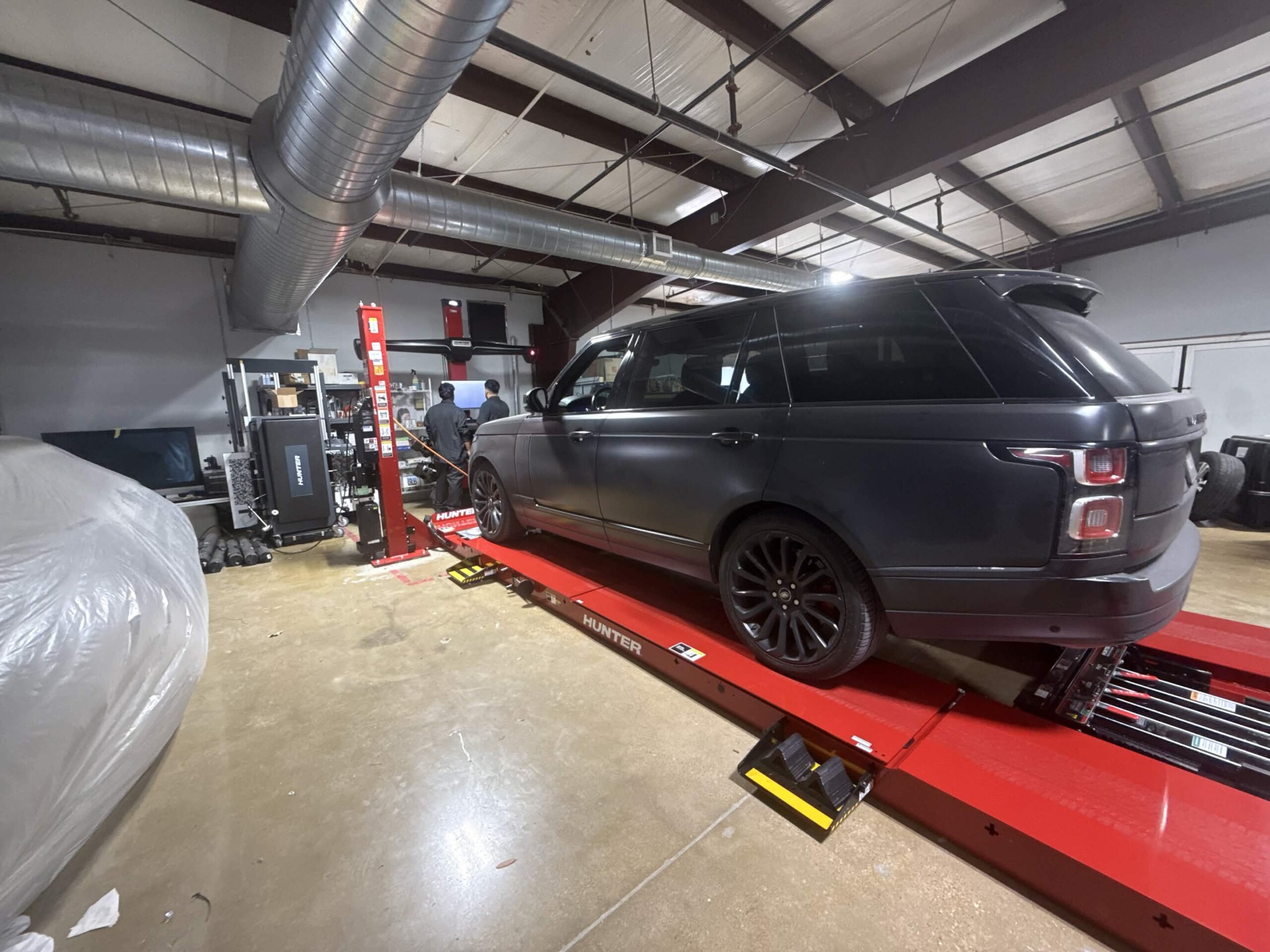
Alignment should be explicit on the estimate. Do not assume that “struts installed” includes a measurement, adjustment or printout.
Struts can locate or influence the steering knuckle and wheel geometry. KYB recommends alignment after replacing struts. FCA TSB 02-005-19 Rev. A, a VIN-listed RRT action for certain 2019 (KL) Jeep Cherokees built June 17–20, 2019 with left-front spring sales code ZDE, required technicians to verify toe after reinstalling the strut and spring and to document before-and-after alignment specifications. Those sources support making alignment scope visible; they do not establish one universal procedure for every vehicle.
The estimate should distinguish:
- alignment measurement or inspection;
- actual adjustment;
- any required steering-angle or driver-assistance procedure;
- a before-and-after printout; and
- an additional charge versus an included service.
Current service information for the exact vehicle controls. If the quote excludes alignment, ask what verification the repair procedure requires and what would trigger a separate alignment charge.
Do visible oil marks prove a strut has failed?
Not by themselves. Monroe’s leakage guide distinguishes minor “weepage” from leakage that leaves most of the unit wet or produces dripping fluid. In that manufacturer’s examples, the first condition does not require replacement and the latter does.
That distinction is useful, but a photograph cannot establish the complete diagnosis here. Ask for the location and extent of the fluid, the condition of the shaft and body, and any additional findings such as damage, noise, looseness or a failed mount. A generic “it is oily” description is not enough to normalize a four-figure estimate.
The strut estimate map
Use this table to compare scope. It does not diagnose the vehicle or select parts remotely.
| Estimate line or finding | What to request | What it does not prove |
|---|---|---|
| One front strut | Side, measured/observed finding and exact part number | That the other side failed |
| Two front struts | Separate findings or the stated matched-pair rationale | That both mounts or springs failed |
| Bare strut | List of transferred components and their inspection results | That every reused component is serviceable |
| Complete assembly | Manufacturer, part number and included components | That every included component was individually failed |
| Upper mount or bearing | Noise/play finding and whether it is included in the assembly | That the coil spring or strut body also failed |
| Coil spring | Crack, sag, damage or application-specific reason | That a strut leak automatically damaged the spring |
| Bumper, boot and insulators | Condition and package inclusion | That these items are included with every “strut” |
| Alignment | Measurement, adjustment, printout and charge status | That all four wheels require adjustment |
| Electronic follow-up | Exact-vehicle procedure and system affected | That every strut job requires calibration |
| Related suspension work | Separate finding for each added component | That one worn part proves a control arm, tie rod or bearing is bad |
Normalize two strut quotes before comparing totals
| Comparison field | Estimate A | Estimate B |
|---|---|---|
| VIN, year, make, model, trim and suspension option | ||
| Front or rear; left, right or both | ||
| Bare strut or complete assembly | ||
| Part manufacturer and exact part number | ||
| Coil spring included or reused | ||
| Upper mount and bearing included | ||
| Bumper, boot, insulators and hardware included | ||
| Finding supporting each replaced component | ||
| Labor for disassembly or component transfer | ||
| Alignment measurement included | ||
| Alignment adjustment included | ||
| Printout or post-repair verification | ||
| Exact-vehicle electronic procedure, if any | ||
| Taxes, fees and written parts/labor warranty | ||
| Conditional work and approval point |
A lower total may cover one bare strut and reuse the spring and mount. A higher total may cover two loaded assemblies and alignment. Until the repair units match, the totals are not competing prices for the same job.
What legitimately changes strut replacement cost?
Vehicle and suspension design
The exact axle layout, driven components, steering-knuckle connection, electronic damping and suspension options can change parts and procedures. A model name alone may not select the correct unit.
One side versus an axle pair
Two assemblies cost more than one, but the estimate should identify whether both sides have findings or whether the second unit is proposed to maintain matched damping.
Bare versus loaded parts
A loaded assembly includes more components. A bare-strut path can add disassembly and component-transfer labor. Compare the complete parts-and-labor package, not the price of one box.
Reusable-component condition
Mounts, bearings, springs, boots, bumpers and insulators can change the scope. Each added part needs a finding or an explicit package explanation.
Corrosion, damage and access
Corroded fasteners, collision damage and application-specific access can change labor or reveal conditional work. These must be documented for the actual vehicle rather than added as a generic surcharge in this article.
Alignment and post-repair procedures
Measurement, adjustment, printouts and any exact-vehicle electronic steps can be included, excluded or conditionally required. The quote should say which.
Questions to ask before approving strut work
- Which exact strut position has the confirmed problem?
- What inspection result supports replacement?
- Is the quote for one side or both sides of the axle?
- If both are proposed, is that based on two findings or a matched-pair recommendation?
- Is the part a bare strut or a complete loaded assembly?
- What exact components and hardware are included?
- Which original components will be reused, and how were they checked?
- What is the part manufacturer and exact part number?
- Is alignment measurement included? Is adjustment included?
- Will a before-and-after alignment printout be supplied?
- Does the exact vehicle require any steering-angle or electronic procedure?
- Which additions are confirmed now and which remain conditional?
- Are taxes, fees and the written parts-and-labor warranty included?
The practical answer
Strut replacement cost depends on the exact vehicle, position, one-side or paired scope, bare or complete assembly, reusable-component condition, labor and alignment. Three online totals are not comparable until those fields match.
For a Rowlett-area vehicle, Accelerate’s suspension inspection and repair service is the existing local repair owner. That link is a service destination, not evidence that this article’s dated examples are Accelerate prices or that any particular vehicle needs struts.