

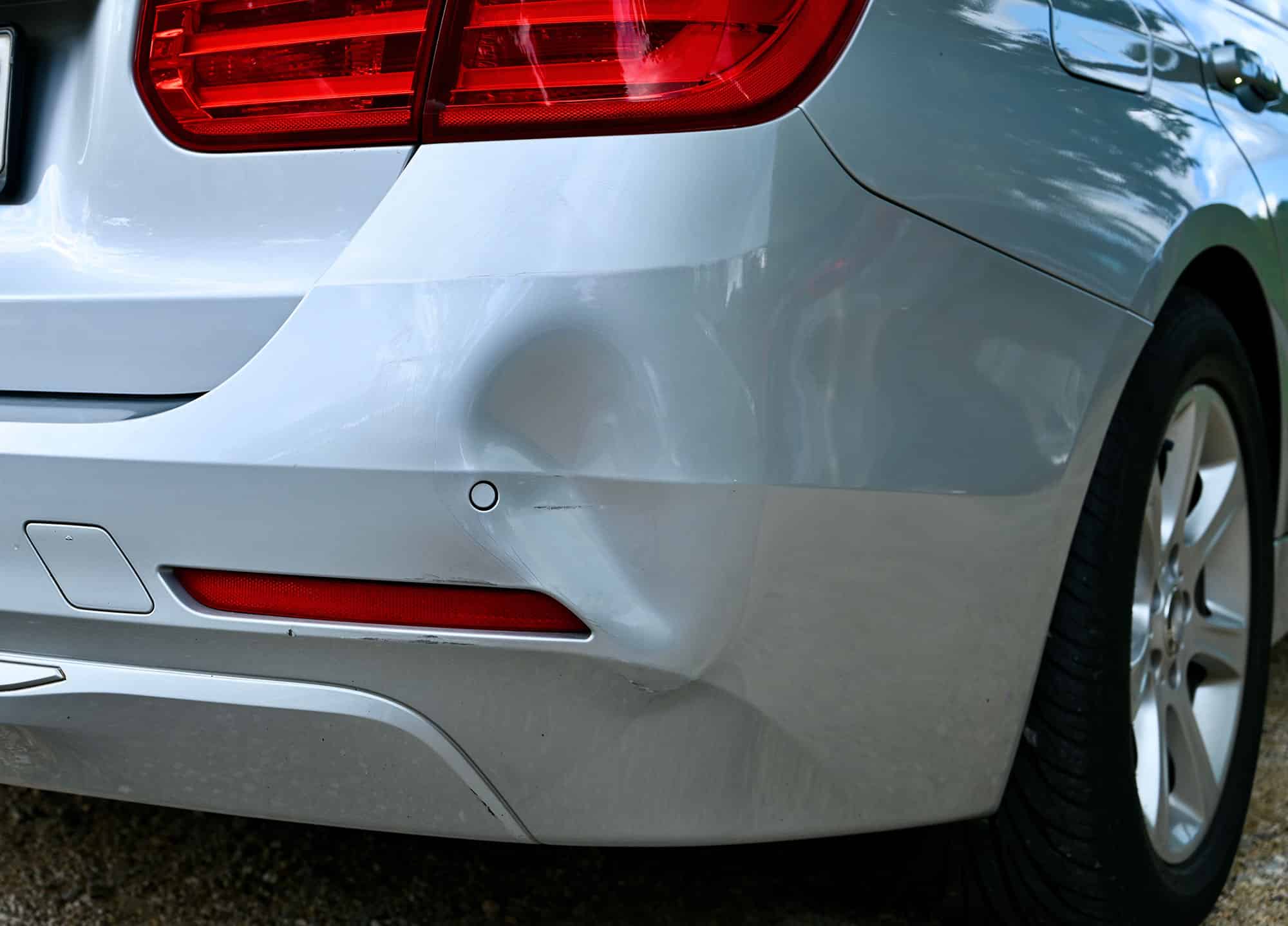
Unibody construction integrates the vehicle’s load-carrying structure into the body. Body-on-frame construction mounts a body or cab on a separate frame. That difference changes where a technician looks and how the vehicle is supported and measured after a collision. It does not tell you, by itself, whether the vehicle is safer, easier to repair or damaged beyond repair.
What is the difference between unibody and body-on-frame?
In a unibody, the floor, rails, pillars, rockers and other body-in-white components work together as the main structure. The assembly can still include parts called frames, rails, cradles or subframes as well as exterior panels. “Unibody” does not mean every visible panel carries the same structural load or that the vehicle is one undivided piece of metal.
In a body-on-frame vehicle, the body or cab is attached through mounts to a separate frame made from rails and crossmembers. The body still contains safety-related and load-bearing pieces of its own. Calling the frame separate does not make the body cosmetic or make every frame repair interchangeable.
Ford’s 2025 Body Builders Layout Book states the terminology directly: its Frame section refers to body-on-frame vehicles, while structural members of a unibody vehicle are treated as part of the body. Federal light-truck rulemaking likewise defines unibody as integrating frame and body components into a combined structure. A Honda Passport recall procedure supplies the contrasting, model-specific example: it distinguishes frame-side from body-side brackets and removes body-mount fasteners before raising the body from the frame for the covered repair. The correct label comes from the exact vehicle’s manufacturer information, not from whether it looks like a truck or SUV.
| Question | Unibody / unit body | Body-on-frame |
|---|---|---|
| Main load path | Integrated body structure, including rails, floor, pillars and rockers | Separate frame rails and crossmembers, with the body or cab attached through mounts |
| What can be structural | Body-in-white components, reinforcements, rails, attachment points and some closures when specified | Frame plus structural areas of the body, cab, mounts and attached systems |
| What must be identified after damage | Exact material, joint, measuring points and permitted repair or replacement procedure | Exact frame design, section, mounting points, dimensions and permitted correction or replacement procedure |
| What the label cannot decide | Safety rating, damage extent, repairability, price or total-loss status | Safety rating, damage extent, repairability, price or total-loss status |
The important word in both structures is load. Collision energy, suspension forces and seat-belt loads travel through designed paths. Dimensional alignment is a separate geometric condition that must be checked against vehicle-specific information. Which parts participate, which materials they use and which joints connect them vary by vehicle.
Does “frame damage” mean the same thing on both?
No. “Frame damage” is common shorthand, but it can hide the actual repair question.
On a unibody vehicle, a front or rear rail, rocker, pillar, floor section or reinforcement may be part of the integrated structure. On a body-on-frame vehicle, the separate frame can be damaged, but the body, mounts and their relationship to the frame can also require inspection. Suspension pickup points, steering geometry, restraint mounting areas and sensor locations can matter on either construction.
Ford’s structural-repair position includes frames, rails, crush cans, shock towers, welded or bonded body-in-white panels, rockers, floor pans, reinforcements and restraint anchor areas when they affect structural performance. That list is useful because it defeats the idea that only one large rail underneath counts as structure.
Ask the shop to name the damaged component. “Left front rail,” “rocker reinforcement,” “frame crossmember” or “body mount” is more useful than a generic frame label. The estimate should then connect that component to the manufacturer’s current repair information for the exact vehicle.
Can a vehicle look straight and still need structural measurement?
Yes. Panel fit and drivability can provide clues, but neither is a structural measurement.
A door can close while a mounting point remains out of specification. A bumper cover can spring back while the reinforcement or rail behind it has moved. A wheel alignment can identify a geometry problem without showing whether its cause is a suspension part, mounting point or body structure. The reverse is also true: an ugly exterior panel does not prove that the underlying structure moved.
Volvo’s structural-aluminum position statement gives a narrow example of that limit. On the covered Volvo components, a trained visual inspection is only the first step; potential damage or microcracking can require specified nondestructive testing. That does not mean every collision or material needs those tests. A photograph may show recognizable damage, but it cannot establish the complete structural condition or rule out hidden damage for an unidentified vehicle.
Nissan’s collision position statement covers both framed and unibody vehicles. It says the techniques differ, measurements should be taken before and after a frame or structural repair, and model-specific Electronic Service Manual dimensions should be used. It also notes that panels or trim may need removal to reach measuring points.
Tesla’s 2024 Model 3 collision manual provides another bounded example. Its dimensional page uses known point-to-point dimensions to help diagnose damage. If a measurement is outside specification, the manual calls for mounting the vehicle on a frame bench, measuring again, and then assessing the damage and estimate if it remains outside specification.
Those sources do not create one universal tolerance or inspection routine. They establish the principle: appearance is an observation; vehicle-specific measurement is evidence.
Is body-on-frame always easier or cheaper to repair?
No. A separate frame can change access and part boundaries, but it does not write the estimate.
A body-on-frame loss can involve a rail, crossmember, mount, cab or body structure, bed, suspension, steering, wiring and restraint or driver-assistance components. A unibody loss can range from replaceable exterior-panel damage to a vehicle-specific structural repair. Either construction can require extensive disassembly just to expose the measuring points and full damage path.
Repair cost and repairability depend on questions the architecture label cannot answer:
- Which exact components and joints are damaged?
- What materials and thicknesses are present?
- Does the manufacturer permit straightening, sectioning or only replacement at that location?
- Which fasteners, welds, rivets or adhesives are specified?
- What must be removed for access, anchoring, measuring and corrosion protection?
- Which scans, calibrations, alignments or functional checks apply after the repair?
- Does the vehicle return to the manufacturer’s dimensions and required checks?
Do not assume “unibody damage means totaled.” Do not assume “a truck frame can always be straightened.” A repair-versus-total-loss decision also involves damage scope, vehicle value, parts, labor, insurer rules and state requirements. This page cannot make that decision from a photo or construction label.
Can unibody or full-frame damage be straightened?
Sometimes a manufacturer permits a controlled correction; sometimes it specifies component replacement or restricts where a part may be sectioned. The answer is vehicle-, material-, location- and damage-specific.
Nissan instructs repairers to use the model’s service-manual measurements, anchoring information and corrective methods for both framed and unibody vehicles. Tesla’s older Model S structural guidelines provide a deliberately different example: Tesla does not support pulling or pushing body-structure components with frame-straightening equipment for those procedures, and its material maps and part-repairability rules determine what operations are allowed.
That is why “the shop has a frame machine” is not a complete repair plan. The plan must also identify the exact OEM procedure, material, permitted operation, attachment method and measurement contract. Equipment supports the procedure; it does not replace it.
Consumers should not attempt to pull, heat, weld, cut, anchor or section collision-damaged structure. Those operations can affect adjacent joints, corrosion protection, restraint mounting areas and future crash behavior. They require the vehicle-specific procedure, trained judgment and suitable measuring and repair equipment.
Is unibody automatically safer than body-on-frame?
No construction label is a crash-test score.
Both architectures can be engineered with crash-energy management and occupant-protection structures. Results vary by exact design, size, weight, model year, restraints and test. NHTSA tells shoppers to use vehicle-specific 5-Star Safety Ratings and warns that frontal and Overall Vehicle Scores should be compared only within the same vehicle class and within 250 pounds. IIHS likewise rates crashworthiness and crash avoidance by tested vehicle, not by assigning one score to every unibody or body-on-frame design.
Use the exact year, make and model’s current ratings and safety information. A broad claim that one construction is always safer would skip the test evidence that actually answers the question.
The same caution applies to towing, payload and off-road use. Manufacturers select body-on-frame or unibody architectures as part of a complete vehicle design. Tesla’s 2024 Model Y manual, for example, changes its towing and tongue-weight limits with wheel size, passenger count, seating configuration, cargo and equipment within that one model. The exact manual and vehicle labels control. The construction label alone does not supply a number or permission.
What should a structural-repair estimate show?
A useful estimate lets you follow the evidence from the initial condition to the proposed repair.
| Estimate field | What to look for |
|---|---|
| Vehicle identity | VIN, year, model, body/configuration and relevant build information |
| Construction and damaged area | Unibody or body-on-frame plus the exact rail, panel, reinforcement, mount or crossmember involved |
| Damage evidence | Initial measurements, inspection findings, photos and any components removed to expose the area |
| OEM repair path | Current vehicle-specific procedure and the repair-versus-replace boundary it sets |
| Material and joining method | Steel or aluminum grade where relevant; required welds, rivets, fasteners or adhesives |
| Related systems | Suspension/steering, restraints, sensors, wiring and driver-assistance checks affected by the work |
| Corrosion protection | Seam sealer, coatings and cavity protection that must be restored after access or joining |
| Completion evidence | Final measurements plus required scans, calibrations, alignments and functional checks |
| Conditional work | What hidden findings can change the scope, who approves them and where work pauses |
An estimate may legitimately change after teardown exposes a hidden rail, reinforcement, mount or joint. The important distinction is whether the added work is tied to documented findings and the applicable procedure, rather than to a generic statement that “the frame is bent.”
What should you ask after a collision?
You do not need to diagnose the structure yourself. Bring the facts that help the shop build the right inspection plan:
- the exact point and direction of impact;
- whether the vehicle was pushed into another object;
- dashboard warnings or restraint deployment;
- changes in steering, tracking, noises, door or liftgate operation and panel gaps;
- prior collision or structural repairs; and
- the insurer estimate and photos already taken.
Do not deliberately drive a vehicle to reproduce pulling, noise or instability. Follow the exact warning and owner-manual instructions, and get vehicle-specific guidance when deciding whether it should be driven or transported. This article cannot make a safe-to-drive determination remotely.
For a Rowlett-area vehicle, Accelerate’s frame-straightening and structural repair service is the existing local owner. That link does not diagnose the damage, promise repairability or establish that every manufacturer-specific procedure can be performed on every vehicle.
The practical answer
Unibody means the body structure carries the main loads as an integrated assembly. Body-on-frame means the body or cab is mounted to a separate frame. After damage, both need more than a visual guess. The repair begins by identifying the exact structure, materials and damage path, measuring against vehicle-specific information, and following the manufacturer’s permitted repair or replacement method.
The badge “unibody” or “body-on-frame” starts the inspection plan. It does not finish it.