

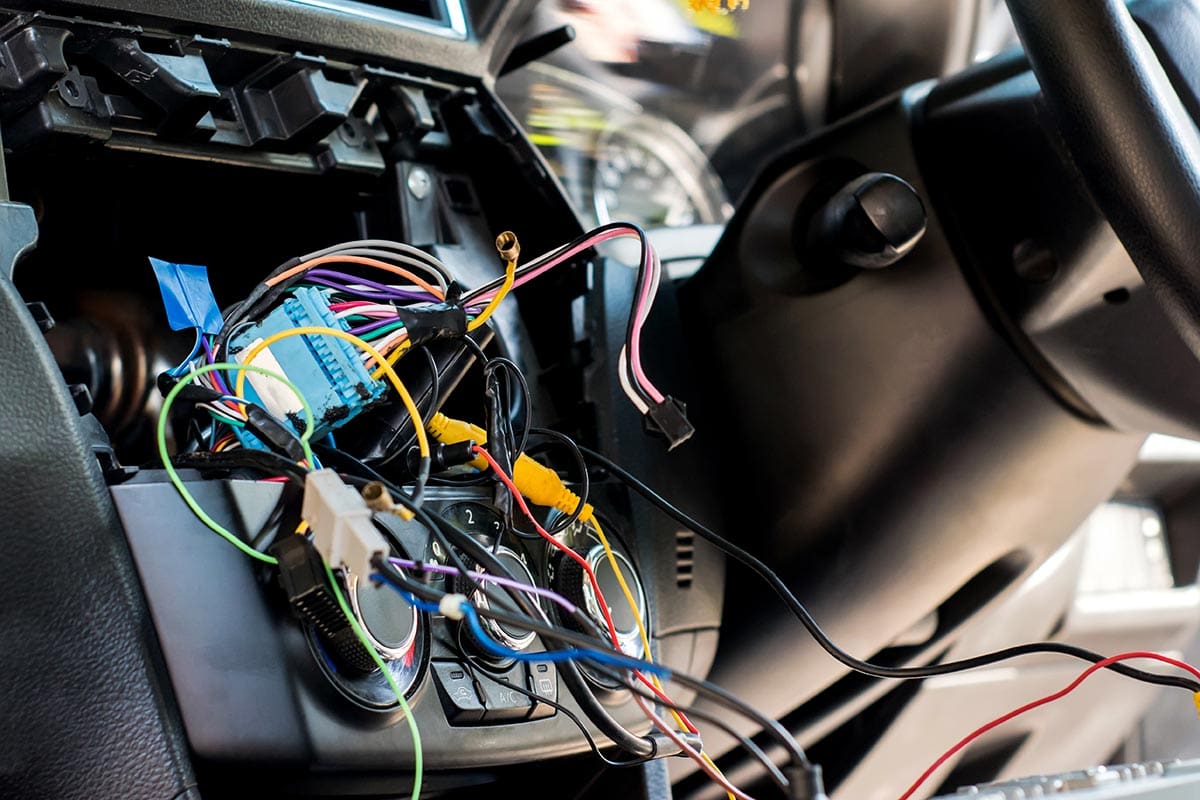
If your key turns and you hear a single loud click, a rapid series of clicks, or nothing at all, a failing starter is one common cause — but a weak battery, a loose cable, or a faulty ignition switch can produce the exact same silence. A full starter replacement typically runs somewhere between roughly $435 and $914 depending on the vehicle, according to RepairPal and YourMechanic pricing data pulled September 2026, with the spread driven mostly by parts cost and engine-bay access rather than labor time. Before anyone replaces yours, a shop should test the starting and charging system, not just react to a quiet key turn.
What a shop actually tests before recommending a replacement
A quiet key turn doesn’t automatically mean a bad starter. RepairPal’s starter-diagnosis guidance describes the first step as a machine test, not a swap: "a mechanic will connect a vehicle that won’t start to a starting and charging system test machine," and the machine "will display results and indicate the possibility of starter failure," sometimes alongside a visual inspection while testing is in progress. Only after that does RepairPal describe the next step — if the starter is found to be at fault, "it will be removed, bench tested and replaced."
YourMechanic’s guidance adds that before a starter is condemned, "simple diagnostic tests should be performed to ensure that the problem is a faulty starter versus a weak battery, faulty neutral start switch, or other faulty electrical component in the starter motor circuit." It also flags that starters "draw large amounts of current from the battery, much more than any other electrically powered device in your car," which is why the battery cables and connections get checked as part of that same test — not as an afterthought. A belt-driven accessory that fails the same week is a separate quote; what a water pump replacement quote includes covers one common case.
This article does not diagnose your vehicle. It describes what that testing looks like so you know whether a shop skipped it. A quote that jumps straight from "it won’t start" to "you need a new starter" without mentioning a bench test or a battery/connection check has skipped a step — ask what the test showed, not just what happened when the key turned. Another belt-driven part that can seize and mimic a hard start is the AC compressor; see what an AC compressor replacement quote includes.
### Symptom vs. what it actually points to
A symptom on its own doesn’t identify the failed part — the sound tells a shop where to look, and the test confirms it. RepairPal’s car-won’t-start guidance pairs specific symptoms with specific likely causes; the table below reflects that pairing.
| Symptom | What it points to | Source |
|---|---|---|
| Rapid clicking, no crank | Weak or dead battery, loose terminals | RepairPal car-won’t-start guidance |
| Single loud click or slow, uneven cranking | Possible starter fault — confirm with a bench/system test before replacing | RepairPal car-won’t-start guidance; YourMechanic starter symptoms |
| Cranking fine, but nothing engages | Ignition switch or neutral safety switch fault | RepairPal car-won’t-start guidance |
| Fast cranking with a spinning or whirring noise | Worn starter solenoid failing to engage the flywheel | RepairPal car-won’t-start guidance |
| Slow cranking with a grinding noise | Loose starter mount, or worn flywheel/pinion gear teeth | RepairPal car-won’t-start guidance |
| Lights, radio, and electronics all work but engine won’t turn over | Points toward the starter itself rather than the battery | YourMechanic starter symptoms |
What a starter replacement quote includes
A quote answering "starter replacement" should account for more than the part. RepairPal’s current estimator data (last updated September 3, 2026) puts the average total between $565 and $796, with labor at $191–$280 and parts at $375–$516 — a range that "does not include taxes and fees" and doesn’t factor in a specific location. YourMechanic’s per-vehicle examples run both narrower and wider than that, from $435 on a 2009 Hummer H2 up to $914 on a 2016 Audi S7, because parts pricing swings hard by make and platform.
| Line item | What it covers | Typical driver of cost |
|---|---|---|
| Part | New, remanufactured, or OEM starter motor | Vehicle make, mounting configuration, part sourcing |
| Labor | Disconnect battery, remove/lower components for access, R&R starter, reconnect and test | Whether the starter is bolted straight to the block/bellhousing or buried behind other parts |
| Battery/connection check | Confirms cables and terminals aren’t the real fault | YourMechanic flags this as standard given the current draw a starter circuit carries |
| Post-install test | Confirms the vehicle starts and cranks normally after the swap | Implied by RepairPal’s bench-test-then-install sequence |
No fetched source in this draft states a specific core-charge dollar amount for starters, so none is published here — see the source-limits note below.
OEM vs. remanufactured vs. new aftermarket
Shops commonly source a replacement starter three ways: new OEM (from the vehicle manufacturer’s parts network), new aftermarket, or remanufactured. Neither RepairPal nor YourMechanic, in the pages fetched for this draft, publishes a controlled price comparison across those three sourcing paths for the same vehicle, so this section states the tradeoff in general terms rather than a number: a remanufactured unit is typically the lowest-cost option and is what most of the example quotes below likely reflect, since neither source specifies sourcing for each example price. Ask your shop which type is quoted — the answer changes both the price and the warranty that applies.
Dated example quotes
These are the exact figures the fetched sources published — not AAR’s pricing, and not a promise about what any specific vehicle will cost.
| Source | Vehicle | Parts | Labor | Total | Date |
|---|---|---|---|---|---|
| YourMechanic | 2009 Chevrolet Trailblazer | $259.29 | $204.38 | $464 | Accessed Sept. 2026 |
| YourMechanic | 2009 Hummer H2 | $274.48 | $160.58 | $435 | Accessed Sept. 2026 |
| YourMechanic | 2010 Chrysler Sebring | $295.56 | $262.78 | $558 | Accessed Sept. 2026 |
| YourMechanic | 2015 Infiniti QX80 | $337.33 | $233.58 | $571 | Accessed Sept. 2026 |
| YourMechanic | 2011 BMW X5 | $362.24 | $335.77 | $698 | Accessed Sept. 2026 |
| YourMechanic | 2016 Audi S7 | $578.12 | $335.77 | $914 | Accessed Sept. 2026 |
| RepairPal | National average (all vehicles) | $375–$516 | $191–$280 | $565–$796 | Sept. 3, 2026 |
YourMechanic publishes a full parts/labor breakdown for all six examples above, plus an "average dealer price" and a stated savings percentage against that dealer price for each; those dealer-comparison figures are YourMechanic’s own marketing framing rather than an independent cost source, so they aren’t reproduced here as a factual benchmark.
Access and mounting: why some jobs cost more than others
Labor cost on a starter job tracks how buried the starter is, more than raw wrench time. YourMechanic’s guidance notes that "the procedure to access the starter varies across car models and can require removal, or lowering, of other vehicle components" — on some platforms the starter bolts straight to the engine block or transmission case with two bolts and clear access; on others, exhaust, intake, or mounting components have to come off first to reach it. Neither source fetched for this draft publishes a labor-hours figure broken out by engine layout or mounting position, so this draft does not state one — access difficulty is named as a qualitative cost driver only, matching what the sources actually document.
Warranty and core charge: what to read on the parts line
The parts line on a starter quote can hide two things worth asking about: the warranty term and a core charge. No source fetched for this draft publishes a specific core-charge dollar figure for starters, so none is stated here — see the source-limits note below. As a concept, a core charge is a refundable deposit some suppliers add when a remanufactured part is purchased, returned when the old (failed) starter is handed back; ask your shop directly whether the quote includes one and whether it comes back to you. Warranty terms also vary by part type — YourMechanic’s own service page cites a 12-month/12,000-mile guarantee on its own mobile-mechanic work, but that’s a company-specific policy, not a starter-parts industry standard, and no source in this draft’s register compares warranty length across new OEM, new aftermarket, and remanufactured starters. Get the warranty term in writing before you approve the repair, the same way you’d confirm a price.
Signs you’re being quoted for the wrong part
A quote can be technically real and still be for the wrong repair. The clearest sign, per RepairPal’s diagnosis guidance, is a shop moving straight from "it won’t start" to a starter recommendation without mentioning a starting/charging system test — the source treats that machine test as the standard first step, not an optional one. A second sign is a quote that never mentions checking the battery or cable connections, given that YourMechanic names that check as necessary before a starter is condemned, specifically because the starter circuit draws more current than anything else in the car. A third is a quote that can’t say whether the part is new, remanufactured, or OEM, since the sources here show that distinction changes both price and likely warranty coverage. None of this means a given quote is wrong — it means the questions above have answers worth hearing before you sign off.
When it’s not the starter
A no-start or slow-crank symptom doesn’t always mean a starter-motor part. Before paying for a starter, ask what was ruled out:
- Weak or dead battery. RepairPal’s guidance points rapid clicking and slow cranking toward the battery first, especially if terminals are loose or the battery is old — a state a simple test rules in or out before a starter comes off.
- Loose or corroded battery cables and terminals. YourMechanic flags cable and terminal inspection as necessary given the current a starter circuit pulls; a bad connection can mimic a dead starter.
- Faulty ignition switch. RepairPal describes the ignition switch as the electrical switch that sends power to the starter motor when you turn the key — "these switches fail electronically and mechanically," and a mechanical failure can prevent the key from even turning.
- Neutral safety switch not engaging. On an automatic transmission, RepairPal notes this switch has to confirm the vehicle is in park or neutral before it allows the starter circuit to complete; a failed switch can block starting with a good starter and a good battery.
- Immobilizer/anti-theft system not recognizing the key. RepairPal describes this as a programmed-key system separate from the mechanical starting circuit — if the car doesn’t recognize the key, it won’t start regardless of starter condition, and diagnosing it needs shop equipment, not a parts swap.
What to ask before you approve the repair
- What did the starting/charging system test show?
- Was the battery and were the cable connections checked separately, and what was the result?
- Is there a click, a grinding noise, or a spinning/whirring noise — and what did that noise point to?
- Is the quoted part new, remanufactured, or OEM — and what’s the warranty on each?
- Does the quote include a post-install start-and-crank recheck?
A shop that can answer all five before you approve the work is testing the system, not guessing at the part. If a shop can’t answer the first two — what the test showed, and how the battery and connections checked out separately — that’s a sign the diagnosis stopped at "it won’t start" rather than the starting circuit itself, and it’s fair to ask for the actual test before you approve a $400–$900 repair.
None of this is a claim that any specific vehicle needs a starter. RepairPal’s own sequence — test first, then remove and bench test the old starter, then install the new one — exists precisely because a click or a silent key turn can come from several different points in the starting circuit, and the point of a proper test is to find the actual one before a part gets replaced.
For a Rowlett-area vehicle that won’t start or is cranking slowly, Accelerate’s diagnostic service is the existing local owner for identifying what’s actually behind a no-start or slow-crank complaint before any part is replaced. That link is not a claim that starter replacement itself is offered or priced there.